Our Story

Nine decades. 52 acres. Countless lives changed.

Changing Lives Since 1939

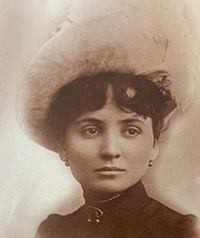
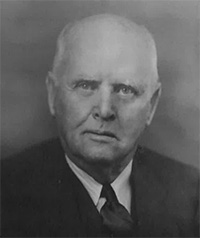
Hendrick Home for Children (HHC) was established in 1939 by Thomas and Ida Hendrick with the vision to help children and families. Today the HHC campus sits on 52 acres in Abilene, Texas, and has served hundreds of children and families.

Our History

1862

Thomas “Tom” Gould Hendrick was born on October 23, 1862, in Muhlenberg County, Kentucky.

1866

Ida Nations was born on August 12, 1866, in Gonzales County, Texas.

1883

On May 13, 1888, Tom and Ida married in Union Church in Alpine, Texas.
1889

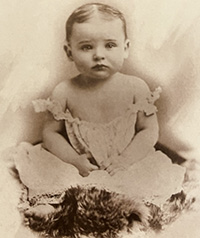
Tom and Ida’s only son, Joseph, is born. Tragically he passed away just two and a half years later from an illness.

1917

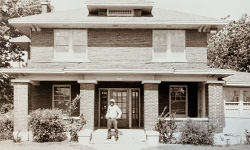
The Hendricks bought acreage in Winkler County in 1917, which turned into the beginning of Hendrick Field due to a lucky strike of oil on the property in 1926.

1932

Tom and Ida moved to Abilene in 1932 and became generous contributors to the West Texas Baptist Sanitarium (now Hendrick Health), Hardin Simmons University, First Baptist Church (Friendship Mission), and several individuals who wanted to attend college or had basic needs.

1939

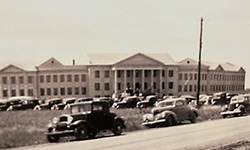
The Hendrick Home for Children building was designed by architect, David S. Castle, in 1938. The doors opened in 1939 with 12 children from three families.
1939

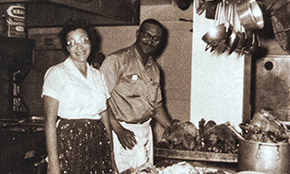
Willie and Margaret Turnerhill move onto campus. Willie continues to be Mr. Hendrick’s right-hand man and Margaret oversees the Home’s kitchen.
1972

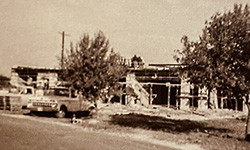
Tom E. Roberts Recreation Center opens on campus featuring indoor basketball and volleyball courts.
1974

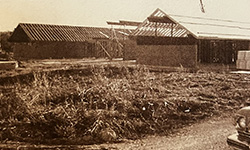
Two new cottages open to house elementary school girls and boys.

2010

Dancing with the Abilene Stars, the Home’s main fundraiser, was staged for the first time. It has raised more than $6 million to support children and families.
2014

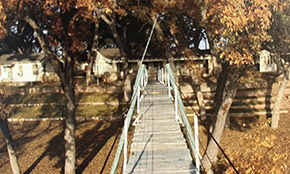
The Hendrick River Ranch is sold with the proceeds supporting the Home’s endowment.

2016

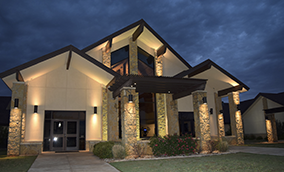
The Dusty L. Rhodes complex opens to house single-parents in the Family Care program.
2021

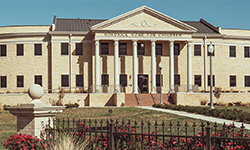
The new main building opens featuring suites for single-parent families, apartments for the After Care program, administrative offices, a dining hall, and a museum showcasing the Hendrick’s legacy and the Home’s rich history.

Legacy Hall

Legacy Hall was unveiled on the third floor of the new main building as a tribute to the enduring legacy of Tom and Ida Hendrick and the rich history of Hendrick Home for Children. Curated by Judy Godfrey and Bird Thomas, the exhibit features a historical timeline that traces the story of the Home from the birth of Tom and Ida Hendrick to the present day.

Six carefully designed vignettes, showcase scenes from the Home’s past, including the basement, Hendrick Ranch, dormitory, Tom Hendrick’s office, kitchen, and infirmary. Additional displays highlight the lives and contributions of the Hendricks, as well as Willie and Margaret Turnerhill, whose influence helped shape the Home’s story.
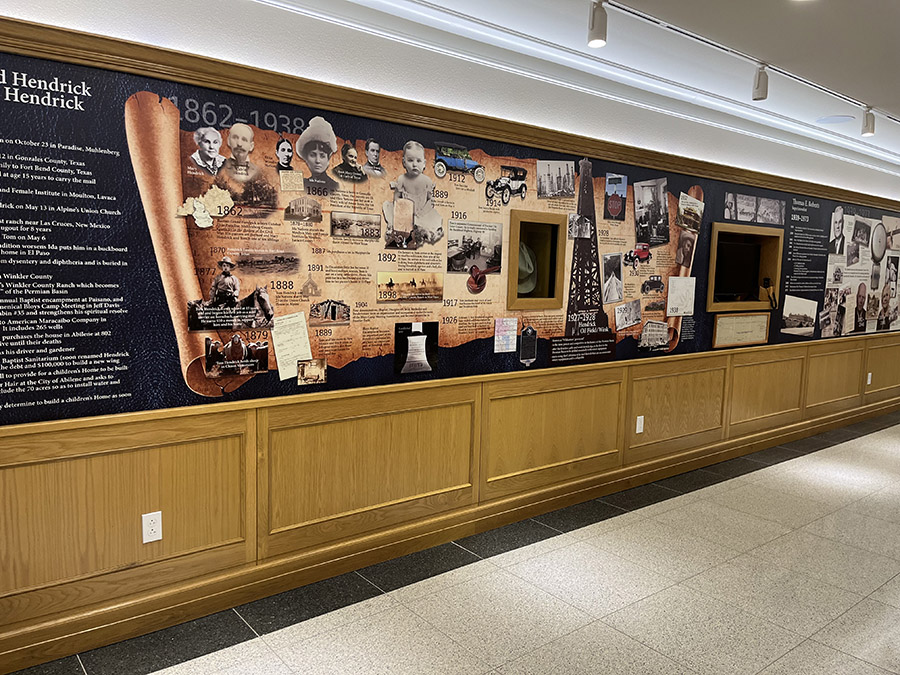

Legacy Hall reflects an important truth about Hendrick Home for Children: it was not built in a single moment. It was envisioned, thoughtfully planned, and created with a mission to provide shelter, love, and second chances for generations of children and families.

See Inside the Museum

The original Basic Care housing included dormitories with 25 beds for the girls on the first floor and 25 beds for the boys on the second floor.
Enlarge Image
The Hendrick River Ranch was a beloved part of the Home through 2014. Utilized for outdoor recreation, housing boys in the Basic Care program, and the Home's large holiday and reunion gatherings, it even featured a suspension bridge that was designed by superintendent, Tom Roberts.
Enlarge Image
The original main building included an infirmary to treat the Home's children.
Enlarge Image
The original kitchen was run by Margaret Turnerhill. Famous for her great cooking, her recipes are still utilized in the kitchen today.
Enlarge Image
The original main building included a sewing room and barber shop where children were taught these important skills.
Enlarge Image
Mr. Hendrick's office showcases his desk, worn chair, business ledgers, surveying equipment, and even his saddle. The wood molding and flooring are from the original main building.
Enlarge Image